

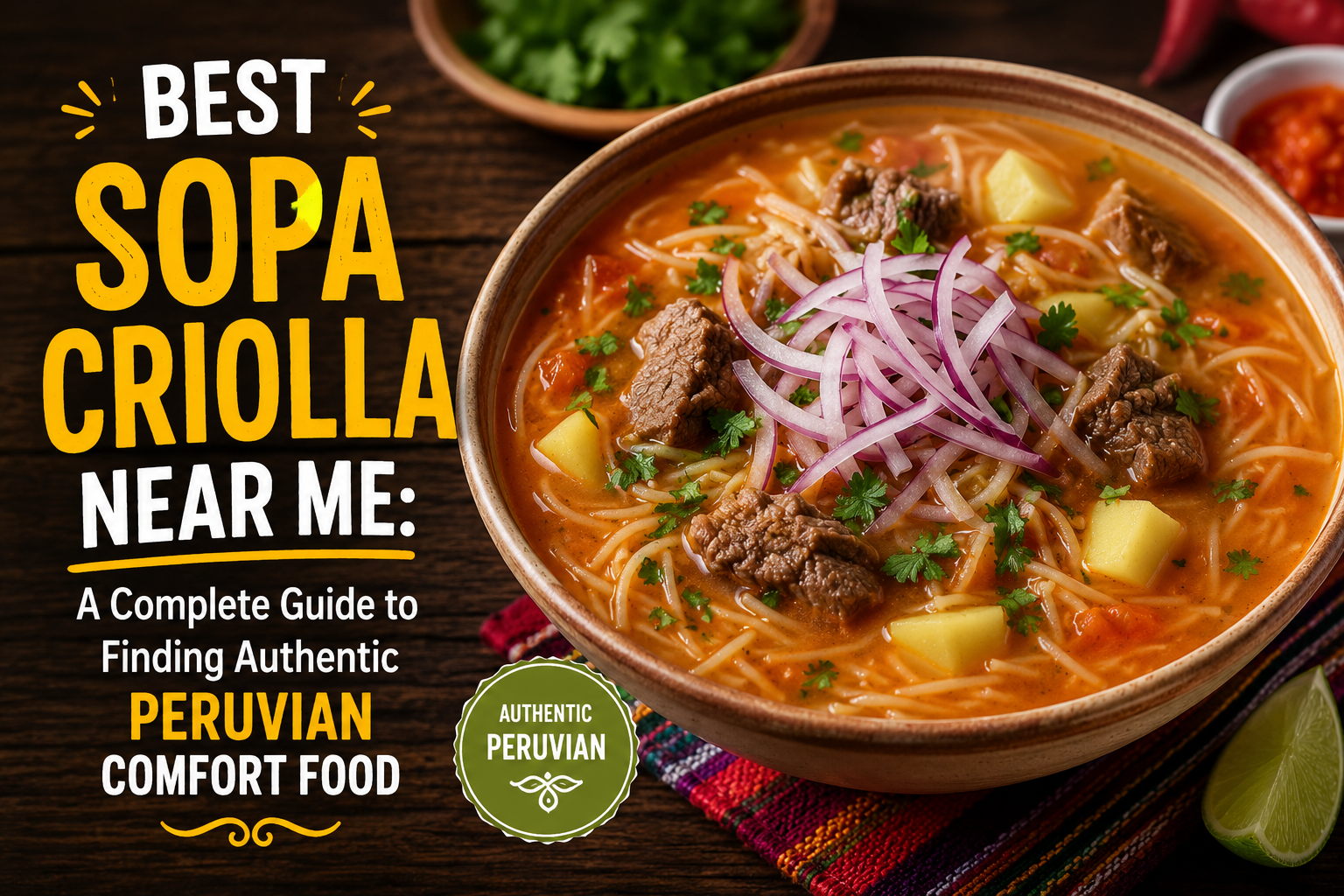
Sopa Criolla is one of Peru’s most beloved comfort foods. Rich, flavorful, and deeply satisfying, this traditional soup combines beef, vegetables, noodles, herbs, milk, and spices into a hearty meal that reflects Peru’s diverse culinary heritage. Whether you’re exploring Peruvian cuisine for the first time or searching for a familiar taste from home, finding the best sopa criolla near me can turn an ordinary meal into a memorable dining experience.
As Peruvian food continues to gain international recognition, more restaurants around the world are adding authentic dishes to their menus. However, not every restaurant prepares this classic soup in the traditional way. Understanding what makes a great bowl of Sopa Criolla can help you choose a restaurant that delivers authentic flavor and quality.
This guide explores the history of the dish, its ingredients, regional variations, how to identify authentic restaurants, and what to expect when ordering this famous Peruvian soup.
What Is Sopa Criolla? Best Sopa Criolla Near Me
Sopa Criolla is a traditional Peruvian soup that combines European cooking techniques with local South American ingredients. It is considered one of Peru’s signature comfort foods and is commonly enjoyed for lunch or dinner.
The soup usually contains thin slices of beef, onions, garlic, tomatoes, angel hair noodles, milk, eggs, oregano, and flavorful beef broth. Some recipes also include ají panca, a mild Peruvian red pepper that gives the soup its characteristic color and smoky flavor.
Unlike lighter soups, Sopa Criolla offers a rich, creamy texture balanced by fresh herbs and savory spices. The combination creates a meal that is both filling and comforting without being overly heavy.
Many families in Peru have their own treasured recipe, often passed down through generations. This personal touch makes every version slightly different while preserving the traditional essence of the dish.
The History Behind This Iconic Peruvian Soup
The story of Sopa Criolla reflects Peru’s multicultural history. During the Spanish colonial period, European ingredients such as milk, beef, and pasta blended with native Peruvian herbs, peppers, and cooking traditions.
The term “Criolla” refers to foods that evolved from this cultural fusion.Best Sopa Criolla Near Me Over time, local cooks perfected recipes that combined Old World and New World ingredients into dishes unique to Peru.
Today, Sopa Criolla remains a staple in Peruvian households, restaurants, and family celebrations. Its popularity has spread beyond Peru as Best Sopa Criolla Near Me Peruvian cuisine continues gaining recognition around the world.
Modern chefs often preserve the traditional preparation while adding subtle contemporary touches, allowing new generations to enjoy this classic favorite.
Why People Search for the Best Sopa Criolla Near Me
Many people search for the best sopa criolla near me because authentic Peruvian cuisine can be difficult to find outside major cities.
Travelers often want to experience genuine local flavors after hearing about Peru’s world-famous culinary scene. Meanwhile, members of the Peruvian community frequently seek restaurants that recreate the comforting taste of homemade recipes.
Food enthusiasts also enjoy exploring international cuisines, and Sopa Criolla offers an excellent introduction to Peru’s rich culinary traditions.
Another reason for its growing popularity is its versatility. It works equally well as a comforting winter meal, a satisfying lunch, or a nourishing dinner after a long day.
Traditional Ingredients That Define Authentic Flavor
The quality of the ingredients plays a major role in creating an authentic bowl of Sopa Criolla.
Fresh beef is one of the most important components.Best Sopa Criolla Near Me Thin slices cook quickly while remaining tender and flavorful.
Garlic and onions create the aromatic base, while ripe tomatoes provide natural sweetness and acidity. These vegetables slowly cook together to build deep layers of flavor.
Peruvian oregano adds a distinctive herbal note that differs slightly from Mediterranean oregano. Ají panca contributes mild heat, smoky richness, and the soup’s signature reddish color.
Milk softens the broth and creates a creamy texture without making the soup overly thick. Many traditional recipes also include a poached or lightly beaten egg added near the end of cooking.
Angel hair noodles complete the dish by adding texture while absorbing the flavorful broth.
Fresh parsley or chopped herbs often garnish the finished bowl, adding brightness and freshness.
How Authentic Restaurants Prepare Sopa Criolla
Finding the best sopa criolla near me often depends on understanding how authentic restaurants prepare this traditional recipe.
Experienced Peruvian chefs rarely rush the cooking process. The broth develops slowly, allowing the flavors of beef, vegetables, herbs, and spices to blend naturally.
Instead of relying on excessive seasonings, authentic kitchens focus on balance. Every ingredient contributes without overpowering the others.
Fresh ingredients remain essential. High-quality tomatoes, onions, garlic, herbs, and beef create noticeably better flavor than processed alternatives.
Many family-owned Peruvian restaurants continue using recipes that have been preserved for decades. These establishments often prepare their soups fresh each day rather than reheating large batches.
The result is a bowl that tastes homemade rather than commercial.
Signs You’ve Found a Great Peruvian Restaurant
Not every restaurant advertising Peruvian food delivers an authentic dining experience.
One of the first signs of quality is a focused menu. Restaurants specializing in Peruvian cuisine often serve traditional favorites such as Lomo Saltado, Ají de Gallina, Anticuchos, Arroz con Pollo, Causa Limeña, and Pollo a la Brasa alongside Sopa Criolla.
The atmosphere can also provide clues. Family-owned restaurants frequently display Peruvian artwork, music, and cultural influences that reflect pride in their heritage.
Friendly staff who understand the dishes and can explain ingredients usually indicate genuine experience with the cuisine.
Consistency is equally important. Authentic restaurants maintain the same quality across every visit, ensuring customers receive a satisfying meal every time.
Regional Variations Across Peru
Although Sopa Criolla follows a traditional foundation, regional cooking styles influence the final recipe.
In Lima, the soup often features a richer broth with a generous amount of milk and tender beef.
Mountain communities may prepare heartier versions using locally available herbs and vegetables that reflect Andean agriculture.
Coastal areas sometimes emphasize lighter broths while maintaining the soup’s classic ingredients.
Family recipes can also differ significantly. Some cooks add extra garlic, while others increase the amount of ají panca or oregano to create a more robust flavor.
These regional differences highlight Peru’s remarkable culinary diversity while preserving the identity of the dish.
What Makes One Bowl Better Than Another?
People searching for the best sopa criolla near me often discover that small details make a significant difference.
A well-prepared soup should have a rich but balanced broth. No single ingredient should dominate the flavor.
The beef should remain tender rather than chewy. Vegetables should taste fresh instead of overcooked.
Noodles should be soft while maintaining their texture instead of becoming mushy.
The milk should blend smoothly into the broth without separating, creating a creamy finish that complements the savory ingredients Best Sopa Criolla Near Me.
Finally, the aroma should immediately reveal notes of garlic, oregano, slow-cooked beef, and traditional Peruvian spices.
These characteristics distinguish exceptional Sopa Criolla from average versions and create the comforting experience that has made this dish a beloved part of Peruvian cuisine.
How to Choose the Right Restaurant
Once you’ve narrowed down your options, look beyond ratings alone. A restaurant may have excellent reviews for grilled chicken or seafood but receive little praise for its soups. Reading recent customer comments can reveal whether the kitchen consistently prepares traditional Peruvian dishes with care.
Pay attention to the menu. Restaurants that feature a wide range of classic Peruvian recipes often have greater experience with authentic cooking techniques. If Sopa Criolla is listed as a signature dish or a seasonal favorite, that’s another positive sign.
Freshness is equally important. Restaurants that prepare soup daily usually produce better flavor and texture than those relying on pre-made batches. A freshly made broth develops a richer aroma and a more balanced taste.
If you’re searching for the best sopa criolla near me, consider visiting during lunch hours when many Peruvian restaurants prepare their soups fresh for the day’s service.
What to Expect When Ordering
A traditional serving usually arrives in a deep bowl filled with steaming broth and generous portions of beef and noodles. The aroma should be warm and inviting, with noticeable hints of garlic, oregano, tomato, and slow-cooked stock.
The broth should have a creamy appearance without being overly thick. Every spoonful should deliver balanced flavors instead of excessive salt or spice.
Depending on the restaurant, the soup may be served with fresh bread or toasted rolls. Some diners enjoy adding a squeeze of lime for a brighter finish, while others prefer to enjoy the soup exactly as prepared by the chef.
Portion sizes are often generous, making the dish suitable as a complete meal rather than just an appetizer.
Popular Peruvian Dishes to Enjoy Alongside Sopa Criolla
Although Sopa Criolla is satisfying on its own, many people enjoy pairing it with other traditional Peruvian specialties.
Lomo Saltado remains one of Peru’s most famous dishes, combining stir-fried beef, onions, tomatoes, soy sauce, and fries. Causa Limeña offers a refreshing contrast with layers of seasoned mashed potatoes and flavorful fillings such as chicken, tuna, or avocado.
Anticuchos, made with grilled marinated beef heart, showcase another important part of Peru’s street food culture. Pollo a la Brasa, Peru’s famous rotisserie chicken, is another excellent option for those dining with family or friends.
For dessert, many restaurants serve classic treats like Suspiro a la Limeña, Alfajores, or Arroz con Leche, providing a sweet ending to a comforting meal.
Nutritional Value and Health Benefits
Sopa Criolla is more than a delicious comfort food. It also provides a balanced combination of protein, carbohydrates, vitamins, and minerals.
Lean beef supplies protein, iron, zinc, and vitamin B12, all of which support energy production and muscle health.
Tomatoes, onions, and garlic contribute antioxidants and beneficial plant compounds that complement a healthy diet. Fresh herbs add flavor without relying on excessive sodium.
The broth helps maintain hydration, while noodles provide carbohydrates that supply lasting energy. Milk contributes calcium and protein, making the soup more filling.
As with many traditional recipes, nutritional content varies depending on preparation methods and serving size. Restaurants may adjust ingredients to suit local preferences or dietary needs.
Why Peruvian Cuisine Continues to Grow Worldwide
Peruvian food has earned international recognition thanks to its remarkable diversity and bold flavors. Influences from Indigenous, Spanish, African, Chinese, Japanese, and Italian communities have shaped one of the world’s most exciting culinary traditions.
Cities across North America, Europe, Australia, and Asia now feature dedicated Peruvian restaurants serving authentic regional dishes.
Chefs continue introducing diners to classics such as ceviche, rocoto relleno, papa a la huancaína, and Sopa Criolla, helping more people appreciate Peru’s rich food culture.
This growing popularity makes it easier than ever to discover authentic flavors without traveling to South America.
Common Mistakes People Make When Looking for Authentic Sopa Criolla
Many diners assume every Latin American restaurant serves the same cuisine. In reality, Mexican, Colombian, Argentine, Chilean, and Peruvian foods each have unique ingredients, cooking methods, and traditions.
Another common mistake is choosing solely based on low prices. Authentic ingredients often cost more, and restaurants that invest in quality usually provide a better dining experience.
Ignoring customer photos can also lead to disappointment. Images often reveal portion size, broth consistency, and ingredient quality before you visit.
Finally, don’t hesitate to ask staff about the preparation. Restaurants that proudly explain their recipes often value authenticity and tradition.
Bringing the Experience Home
If you cannot find a nearby Peruvian restaurant, preparing Sopa Criolla at home can be a rewarding alternative.
Many specialty grocery stores now carry Peruvian ingredients such as ají panca paste, Peruvian oregano, and other pantry essentials. Fresh vegetables, beef, milk, and noodles are widely available in most supermarkets.
Cooking the soup yourself also allows you to adjust seasoning, richness, and portion size while learning more about Peru’s culinary heritage.
Many families enjoy making the recipe together, preserving traditions while creating new memories around the dinner table.
Why This Dish Remains a Timeless Favorite
Despite changing food trends, Sopa Criolla continues to hold a special place in Peruvian homes and restaurants. Its combination of simple ingredients, balanced flavors, and comforting warmth appeals to people of all ages.
Unlike trendy dishes that come and go, traditional recipes endure because they offer familiarity, nourishment, and cultural connection. Whether served during a family gathering or enjoyed after a busy day, the soup delivers a sense of comfort that few meals can match.
Those searching for the best sopa criolla near me are often seeking more than a bowl of soup—they’re looking for an authentic experience rooted in history, hospitality, and tradition.
Frequently Asked Questions
Is Sopa Criolla spicy?
Traditional Sopa Criolla has a mild level of spice. Ají panca adds depth and smoky flavor rather than intense heat, making the soup suitable for most people.
Is Sopa Criolla served year-round?
Yes. Although it’s especially popular during cooler weather, many Peruvian restaurants serve it throughout the year because of its popularity as a comforting meal.
Can vegetarians enjoy a version of Sopa Criolla?
Some restaurants prepare vegetarian adaptations using vegetable broth and plant-based ingredients. While different from the traditional recipe, these versions can still capture many of the soup’s signature flavors.
How long does homemade Sopa Criolla last?
Properly refrigerated, homemade soup generally stays fresh for up to three days. Many people find the flavors become even richer after resting overnight.
What drink pairs well with Sopa Criolla?
Fresh fruit juices, herbal teas, or Peru’s famous purple corn beverage, Chicha Morada, are popular choices that complement the meal without overpowering its flavors.
Conclusion
Finding the best sopa criolla near me is about much more than locating the nearest Peruvian restaurant. It’s about discovering authentic recipes, fresh ingredients, skilled preparation, and the welcoming spirit that defines Peru’s culinary tradition.
Whether you’re enjoying your first bowl or revisiting a longtime favorite, understanding the history, ingredients, and preparation of this classic soup helps you appreciate every spoonful even more. As Peruvian cuisine continues to gain worldwide recognition, authentic Sopa Criolla is becoming easier to discover in cities around the globe.
The next time you’re craving a warm, hearty meal with genuine cultural roots, take the opportunity to explore a trusted Peruvian restaurant. A carefully prepared bowl of Sopa Criolla offers not only exceptional flavor but also a delicious connection to one of South America’s richest food traditions.
